Category: Trademark / Brand Strategy / Foreign Application Priority
Reading Time: 4 minutes
Overview
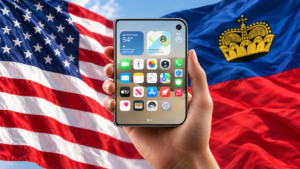
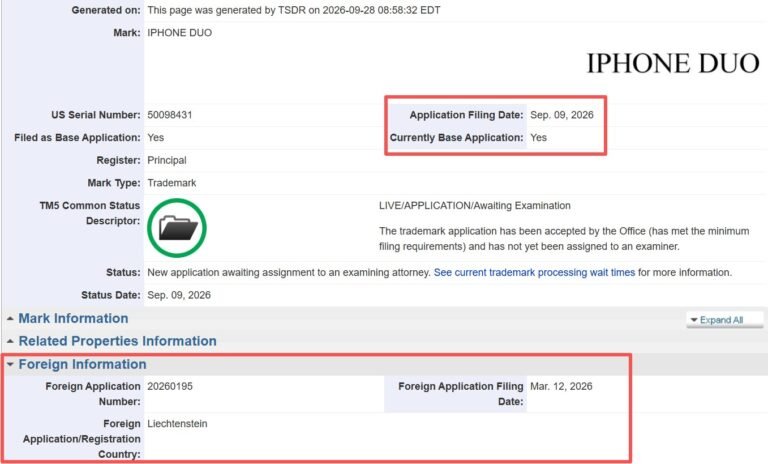
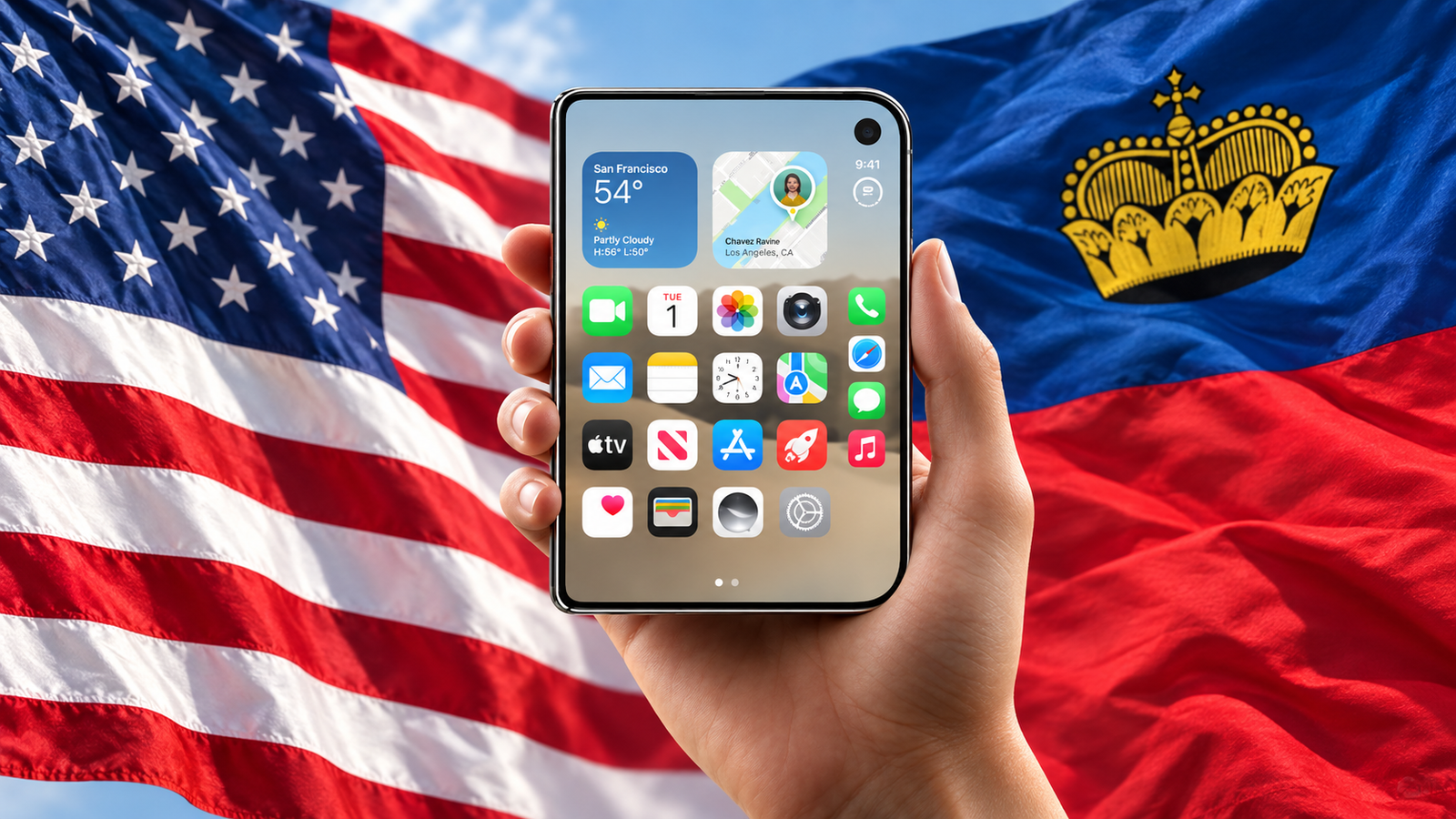
On September 9, 2026, Apple unveiled iPhone Duo, its first foldable iPhone. On the same day, Apple Inc. filed a U.S. trademark application for the name. Noticeably, the application claims priority from a first filing made in Liechtenstein on March 12, 2026. By the time everyone heard the name, Apple’s trademark strategy had already been in motion for almost six months.
As a major evolution in the iPhone’s form factor, Duo gives Apple’s entry into the foldable market a distinct brand identity. For a landmark product like this, the name itself is part of the anticipation surrounding the launch. The sophistication of Apple’s approach lies in establishing an early priority date before introducing the name publicly, while reserving its formal reveal for the announcement—putting trademark law to work in support of product secrecy.
Legal mechanics behind the timing
The legal foundation is the six-month trademark priority period under Article 4 of the Paris Convention. After making a qualifying first application, an applicant can file corresponding applications in other member countries within six months and claim the original filing date. Section 44(d) of the U.S. Lanham Act implements this foreign-priority mechanism, allowing a qualifying U.S. application to benefit from an earlier effective filing date.

Why Liechtenstein?
Located between Switzerland and Austria, Liechtenstein belongs to the European Economic Area (EEA), while remaining outside the European Union. Its independent trademark system connects with those of other markets through international treaties. At the same time, its official online intellectual property register has a limited scope: for trademarks and designs, it includes only rights that are registered, published and still active. A pending filing can therefore remain less visible to routine online monitoring while establishing a priority date. This approach is sometimes described as a “stealth” or “submarine” trademark filing.
During technology development, supply-chain reports, prototype photographs and feature rumors can all offer clues to an emerging product. A publicly searchable trademark application bearing its final name can connect those fragments to a clear brand identity. Choosing a first-filing jurisdiction with lower online visibility for pending applications helps keep that additional clue from surfacing prematurely, preserving the opportunity to unveil the name and its positioning together. Trademark planning thus becomes part of product confidentiality management: establishing an early legal priority position while preserving anticipation and room for a major launch to make an impact. For a company whose upcoming products attract as much scrutiny as Apple’s, keeping product information out of the spotlight can itself carry substantial commercial value.
Connecting registration with use
Liechtenstein also offers a useful feature for international brands. Article 11 of its Trademark Protection Act recognizes qualifying use in the EEA or Switzerland, including use with the proprietor’s consent. Geographically, this extends to four countries beyond EU territory: Iceland, Liechtenstein, Norway and Switzerland. Qualifying use in any of these 31 countries can therefore support the maintenance of a Liechtenstein trademark, while protection in each target market is established through the corresponding national or regional registrations. This creates a smooth connection between a first filing in a small country and the brand’s subsequent international operations.
A move worth learning from Apple
Apple’s approach illustrates the precision that thoughtful brand planning can achieve. The first application establishes the priority date; the filing jurisdiction’s publication practices help manage when the name becomes visible; and international priority connects that groundwork to major markets. Together, these elements preserve the anticipation surrounding a landmark product while securing an advantageous trademark filing position for a name that has yet to be publicly introduced.
In competitive markets with active trademark filing, early preparation can also help address trademark squatting and naming conflicts. Where to file first and when to seek protection in key markets deserve a place alongside product development and launch planning. This coordination is particularly valuable for startups and cross-border businesses preparing simultaneous launches in the United States, Europe and Asian markets: legal and marketing teams can work to the same timeline, putting the legal groundwork in place before the brand makes its public debut.
Disclaimer
This article is for general informational purposes only and does not constitute legal advice. Reading this article does not create an attorney-client relationship. Businesses should consult a licensed before legal or commercial decisions.
Contributors

Jane (Jie) Li
Founding Attorney
California | +1. 213. 774. 2132
jli@innoslaw.com

Kefei Wu
Director of Global Operations
Paris | +33. 6. 98. 12. 89. 80
kwu@innoslaw.com