Category: Trademark / Artificial Intelligence / Likelihood of Confusion
Reading Time: 4 minutes
Overview
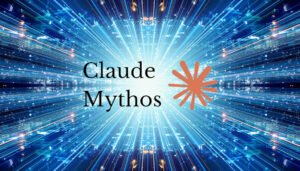
The recent USPTO refusal of Anthropic's CLAUDE MYTHOS trademark application has sparked discussion across the IP community.
The case is still unfolding, but it highlights a challenge facing nearly every AI company today: finding a great product name may be almost as difficult as building the product itself.
Why Was CLAUDE MYTHOS Refused?
What makes this case interesting is that the cited MYTHOS marks do not appear to belong to direct competitors of Anthropic.
Reportedly, the cited marks cover:
1. Software for university endowment and donor management;
2. Document and content management software;
3. AI software for personal development and self-reflection.
At first glance, none of these sound like competitors to a large language model. So why did the USPTO cite them?
In practice, trademark examiners generally focus on the goods and services described in trademark filings, not simply how the products compete in the marketplace. As AI continues to expand into search, content creation, knowledge management, productivity, research, and workflow automation, the lines between software categories are becoming increasingly blurred. In other words, products that seem unrelated from a business perspective may appear much closer from a trademark perspective.
Why Doesn't Adding "CLAUDE" Fix the Problem?
Many founders ask a simple question: If the mark is CLAUDE MYTHOS, and the cited marks are MYTHOS, shouldn't that be enough?
Not necessarily. Under Section 2(d) of the Trademark Act, the issue is whether consumers are likely to be confused about the source of the goods or services. The marks do not need to be identical, and the services do not need to be identical. The USPTO looks at factors such as similarity of the marks, relatedness of the goods and services, expected channels of trade and overall commercial impression.
Anthropic will likely argue that CLAUDE MYTHOS creates a distinct commercial impression. The examiner's initial view, however, appears to be that the addition of CLAUDE may not be enough to overcome concerns created by the shared MYTHOS element and the related software offerings.
Notewhorthly, as the current refusal is not final, Anthropic still have the opportunity to respond and make its case.
The Bigger AI Trademark Problem
This case reflects a broader trend. Every week, new AI models, copilots, agents, assistants, and platforms enter the market. At the same time, the trademark register continues to become more crowded. Many companies are drawing from the same themes: Intelligence, Memory, Knowledge, Agents, Search, Automation, Mythology, Science fiction etc. Understandably, finding a distinctive and registrable trademark is increasingly difficult.
The value of a trademark search is not simply determining whether someone is already using the exact same name. One must be aware of the critical issue at stake: What obstacles might the USPTO, a competitor, or a trademark owner raise after the application is filed?
A comprehensive clearance search should evaluate not only identical marks, but also similar marks, related software categories, pending applications, and marketplace uses that could present future challenges. The earlier those risks are identified, the more options a company has.
Practical Takeaway
The CLAUDE MYTHOS refusal is not necessarily a story about whether Anthropic ultimately gets its registration. Rather, it is a reminder that in today's AI industry, trademark clearance is becoming just as strategic as product development. Building an innovative AI product is hard. Finding an available trademark for it may be getting no easier.
Disclaimer
This article is for general informational purposes only and does not constitute legal advice. Reading this article does not create an attorney-client relationship. Businesses should consult a licensed before legal or commercial decisions.
Contributors

Jane (Jie) Li
Founding Attorney
California | +1. 213. 774. 2132
jli@innoslaw.com

Kefei Wu
Director of Global Operations
Paris | +33. 6. 98. 12. 89. 80
kwu@innoslaw.com