Trump 250 and the Trademark Line Between Public Office and Private Brand
Category: Trademark / Public Figures / Brand Strategy / Government Ethics
Reading Time: 4 minutes
Overview
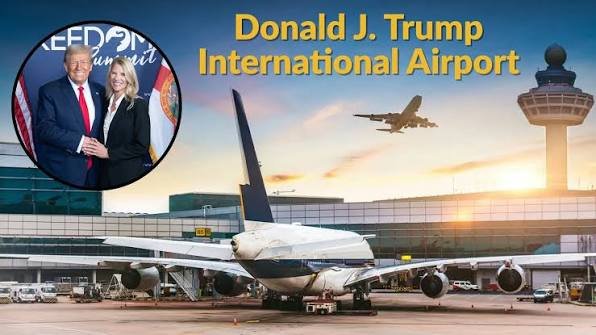
Recent “Trump 250” trademark filings, viewed alongside the renaming of Palm Beach International Airport as “President Donald J. Trump International Airport,” raise a broader question: where should the line be drawn between public recognition, private commercial rights, and institutional independence?
Key Takeaways
1. Personal names can be registered as trademarks with consent.
2. Public office can create conflict-of-interest concerns when private trademark rights expand during a term of power.
3. Similarity between “America 250” and “Trump 250” may raise likelihood-of-confusion concerns.
4. Trademark rules matter most when they apply consistently, regardless of political identity or public status.
Can a Name Become a Trademark?
Yes. Many famous brands began as personal names or surnames: Ford, Disney, Estée Lauder, and others. Under Section 2(c) of the Lanham Act, a mark that consists of or comprises the name, portrait, or signature of a living individual generally cannot be registered without that person’s written consent.
That rule is not the problem. The more difficult question is institutional. In the Trump 250 context, the applicant is connected to a sitting president, while the trademark examining authority is a federal agency within the executive branch. Trademark applications should move through ordinary administrative review: they may be approved, refused, opposed, narrowed, or abandoned based on statutory standards.
But when the applicant and the agency’s ultimate political superior are connected to the same person, the concern is no longer only about trademark doctrine. It becomes a conflict-of-interest issue. Even if no rule is formally broken, the appearance of institutional pressure can affect public trust in the independence of the process.
America 250 vs. Trump 250
The issue becomes more concrete when “Trump 250” is compared with “America 250.” The United States’ 250th anniversary commemorations are coordinated by the congressionally established America 250 Commission, which has used “America 250” as an official commemorative mark.
According to the materials discussed in the market, “Trump 250” filings cover commemorative merchandise such as stickers, tote bags, drinkware, apparel, golf products, and related goods. If “America 250” and “Trump 250” appear on similar patriotic merchandise, ordinary consumers may wonder whether the latter is an official government program, a licensed partnership, or a private political-commercial brand.
That is the classic question in trademark law: likelihood of confusion. The issue is not only whether the words are identical. The analysis may consider visual presentation, commercial context, product categories, public event association, and whether consumers may perceive sponsorship or affiliation.
The America 250 Commission has reportedly opposed other similar filings before. Whether Trump 250 will face the same type of challenge remains to be seen. But the case offers a useful lens for a broader question: how should trademark law treat private marks that closely track official public commemorative branding?
When Trump Was the Squatted Party
The China “TRUMP” trademark dispute offers a useful reversal of perspective. In 2006, a Chinese applicant filed for “TRUMP” in Class 37 for services including construction supervision. Shortly afterward, Donald Trump filed his own application in the same class. Because China’s trademark system generally follows a first-to-file principle, Trump’s later application was partially refused.
Trump pursued review and administrative litigation, but in 2015 the Beijing High People’s Court upheld the refusal. For many years, the famous-name applicant lost under ordinary trademark rules.
The dispute later shifted after Trump’s 2016 election, when his application moved toward preliminary approval. The timing generated ethics discussion in the United States and became a point of political commentary. But the deeper lesson is not whether Trump personally deserved the mark. The deeper lesson is that trademark rules should not change because a person’s political status changes.
Why Procedural Consistency Matters
Both the Trump 250 filings and the earlier China TRUMP dispute point to the same rule-of-law concern: trademark systems depend on institutional consistency.
A president’s name may be commercially valuable. A famous person may have legitimate trademark interests. But trademark law should not become more favorable because the applicant is politically powerful, nor should it become less favorable because the applicant is unpopular.
The value of trademark rules lies in their neutrality: consent requirements, filing priority, likelihood-of-confusion analysis, independent examination, opposition procedures, and procedural stability should apply regardless of who stands on which side.
Practical Takeaway
Personal name trademarks are legitimate. But when a personal name belongs to a public official, brand protection can become a public-law question. The issue is not only whether the mark is registrable. It is whether the process remains independent, credible, and visibly insulated from political power.
Trademark law earns trust not by ensuring that the most famous or powerful party wins, but by applying the same standards to every applicant.
Disclaimer
This article is for general informational purposes only and does not constitute legal advice. Reading this article does not create an attorney-client relationship. Businesses should consult a licensed before legal or commercial decisions.
Contributors

Jane (Jie) Li
Founding Attorney
California | +1. 213. 774. 2132
jli@innoslaw.com

Kefei Wu
Director of Global Operations
Paris | +33. 6. 98. 12. 89. 80
kwu@innoslaw.com