Category: Trademark / Trademark Attorney / USPTO Filing / Brand Protection
Reading Time: 4 minutes
Overview
A responsible attorney acts as a risk assessor, filing strategist, and problem solver throughout the trademark process.
Many business owners think a trademark attorney simply submits an application form. Such misunderstandings can lead to weak filings, avoidable refusals, and future enforcement problems.

Key Takeaways
1. A trademark attorney should evaluate the mark before filing.
2. Clearance search and filing structure require legal judgment.
3. Specimen review and Office Action strategy can affect long-term brand protection.
A Trademark Attorney Does Not File Without Cause
When a business sends a proposed brand name, the first step should not be immediate submission. The first step is judgment. Can the name function as a trademark? Is it distinctive enough? Is it too descriptive? Is it a generic industry term? Does it create obvious refusal risk? Some names are attractive from a marketing perspective because they clearly tell customers what the product does, but that same clarity may make the mark harder to register. Sometimes the best advice from a trademark attorney is not to file immediately, but to adjust the brand before the business invests heavily in packaging, advertising, Amazon listings, or product launch materials.
Clearance Search and Filing Strategy Are Not Mechanical Tasks
A real trademark clearance search is more than checking whether the exact same name already appears in the USPTO database. Trademark conflict analysis looks at earlier registrations, pending applications, similar spellings, similar sounds, related meanings, related goods and services, and overall commercial impression. The key issue is often likelihood of confusion, not exact identity. A trademark attorney also helps design the filing structure. Classes and goods descriptions define the scope of protection and affect the examination result. Descriptions that are too broad, vague, outdated, or inconsistent with the real business may delay approval or weaken future enforcement.
Filing Basis, Specimens, and USPTO Problems
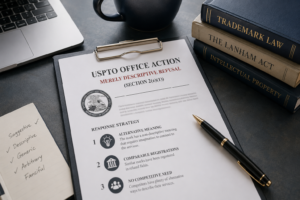
A trademark application can be based on current use, intent to use, foreign registration, or other available bases. Choosing the wrong basis can create avoidable problems. If the mark is already used in U.S. commerce, a use-based application may be appropriate, but the specimen must show proper trademark use. For goods, this may include packaging, labels, product photos, or compliant point-of-sale webpages. For services, it may include advertising or promotional materials that clearly connect the mark with the services. If the USPTO issues an Office Action, the attorney should evaluate the issue, explain the options, and propose a strategy instead of simply forwarding the notice to the client.
Practical Takeaway
Ask always "will this filing strategy protect the business and reduce avoidable future risk?"
A trademark attorney should do more than upload an application. The attorney should assess registrability, conduct a meaningful clearance search, design the filing structure, select the correct basis, review specimens, and handle USPTO issues when they arise.
Disclaimer
This article is for general informational purposes only and does not constitute legal advice. Reading this article does not create an attorney-client relationship. Businesses should consult a licensed before legal or commercial decisions.
Contributors

Jane (Jie) Li
Founding Attorney
California | +1. 213. 774. 2132
jli@innoslaw.com

Kefei Wu
Director of Global Operations
Paris | +33. 6. 98. 12. 89. 80
kwu@innoslaw.com